Franchises
Franchise opening titles
Shows that belong to one another — a shared world, a shared design idea, or sixty years of rebuilding the same forty seconds. Each run is easier to follow whole than one series at a time.

Doctor Who
1963– · 2 series · 18 sequences
Rebuilt for almost every Doctor since 1963, and each rebuild invented its own technique — a camera filming its own monitor, light photographed through moving slots, and the first computer-generated titles on British television.

Star Trek
1966– · 12 series · 20 sequences
Six decades of the same brief — a ship, a starfield, a fanfare — reinterpreted by every era of television technology that came along, from a physical model on wires to a title card that assembles itself.

Buffyverse
1997–2004 · 2 series · 12 sequences
Two shows sharing a world and almost nothing else about their openings — one recut its titles every year around a punk guitar riff, the other held a single brooding sequence and let the cast cards do the changing.

Cowboy Bebop
1998–2021 · 2 series · 2 sequences
The same ninety seconds, twenty-three years apart. One is animation borrowing the grammar of 1960s film titles; the other restages it in live action, shot for shot, against the same recording.
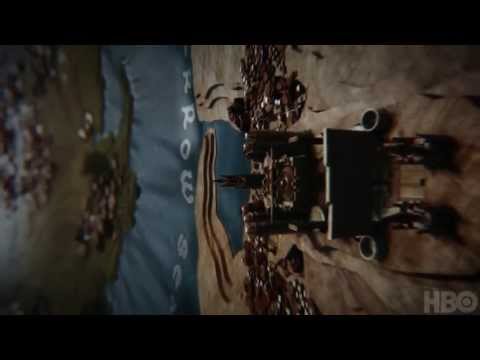
Westeros
2011– · 2 series · 5 sequences
One continent, read two ways. The first sequence builds clockwork cities and tells you where the episode is going; the second follows a bloodline through stone channels and a tapestry recording who killed whom.

The Defenders
2015–2019 · 4 series · 4 sequences
Four series sharing one city and one design idea: dissolve the hero into the substance that defines them. Blood pouring upward into a skyline, purple watercolour bleeding through Hell's Kitchen, Harlem projected onto unmarkable skin, and a skull drawn in gun smoke.